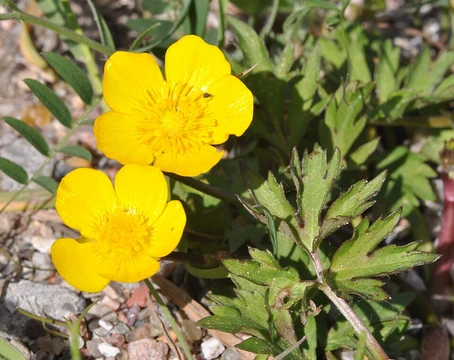
Zinnia
Genus of flowering plants native to the Americas.

Zinnia is a genus of plants in the tribe Heliantheae within the family Asteraceae. Members are notable for their solitary long-stemmed 12-petal flowers that come in a variety of bright colors. The genus is native to scrub and dry grassland from the Southwestern United States to South America, with a centre of diversity in Mexico. Zinnias are annuals, shrubs, and sub-shrubs, typically ranging from 10 to 100 cm tall, with opposite leaves and composite flowers consisting of ray florets surrounding disk florets.
- field
- Botany
- known_for
- Brightly colored, easy-to-grow garden flowers; first plants grown in NASA's Veggie system on the ISS
- native_range
- Southwestern United States to South America, centre of diversity in Mexico
Lore & Background
The genus name honors the 18th-century German scientist Johann Gottfried Zinn, who collected Z. elegans seeds in Mexico. Zinnias are annuals, shrubs, and sub-shrubs native primarily to North America, with a few species in South America. Most species have upright stems, but some have a lax habit with spreading stems that mound over the ground. Their composite flowers consist of ray florets that surround disk florets, which may be a different color and mature from the periphery inward. The flowers have a range of appearances, from a single row of petals to a dome shape, and may be white, chartreuse, yellow, orange, red, purple, or lilac. Each disc floret has five petals that enclose five stamens bearing anthers. When the petals open, the style elongates and pushes pollen upward where it becomes accessible to pollinator insects such as hoverflies. Nectar is secreted at the base of the floret, attracting long‑tongued bees and butterflies. As the style continues to grow, it divides into two branches, with stigmatic surfaces at the tips maturing to receive pollen. Zinnias are favored by butterflies and hummingbirds, and many gardeners add them specifically to attract these animals.
Reader's Guide
Zinnias are popular garden flowers because they come in a wide range of flower colors and shapes, can withstand hot summer temperatures, and are easy to grow from seeds. They bloom all summer long and will reseed themselves each year. Over 100 cultivars have been produced since selective breeding started in the 19th century. Zinnia peruviana was introduced to Europe in the early 1700s, and Z. In the language of flowers, zinnias came to represent thinking of absent friends. Zinnias were the first plants grown as part of a formal NASA experiment using the Veggie plant-growth system aboard the International Space Station, helping researchers study how more complex flowering crops could be cultivated in microgravity. In the Americas, their ability to attract hummingbirds is seen as useful as a defense against whiteflies, making them a desirable companion plant.
Did You Know?
- Zinnias were the first plants grown as part of a formal NASA experiment using the Veggie plant-growth system aboard the International Space Station.
- The genus name honors 18th-century German scientist Johann Gottfried Zinn, who collected Z. elegans seeds in Mexico.
- Zinnias may be white, chartreuse, yellow, orange, red, purple, or lilac.
- Some zinnias are edible, though often reported to have a bitter taste best suited to garnish.
More in Flowering Plants 1-15
Spotted an error? Know more?
This is a living reference — every entry is fact-audited, and reader corrections feed straight into our audit queue. Suggest an edit · See this site's audit record