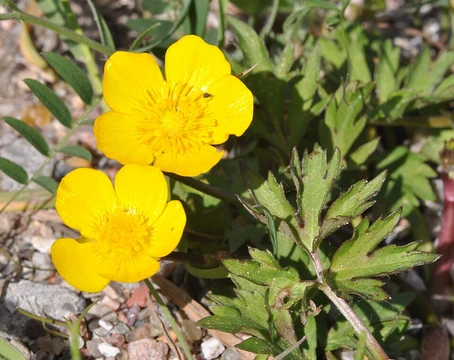
Peony
Flowering plants of the genus Paeonia, native to three continents.

The peony or paeony is any flowering plant in the genus Paeonia, the only genus in the family Paeoniaceae. Peonies are native to Asia, Europe, and Western North America. Scientists differ on the number of species that can be distinguished, ranging from 25 to 40, although the current consensus describes 33 known species. The relationships between the species need to be further clarified. Most are herbaceous perennial plants or woody shrubs, with large, often fragrant flowers in late spring and early summer. Peonies are popular garden plants in temperate regions and are sold as cut flowers on a large scale.
- field
- Botany
- known_for
- Flowering plants in the genus Paeonia, family Paeoniaceae
- native_to
- Asia, Europe, Western North America
- species_count
- 33 known species (consensus), range 25–40
- flowering_season
- Late spring to early summer, lasting 7–10 days
- height_range
- 0.25–3.5 metres (1–11 ft)
Lore & Background
All Paeoniaceae are herbaceous perennials or deciduous shrubs with thick storage roots. The large bisexual flowers are mostly single at the end of the stem, with 3–7 sepals and mostly 5–8 petals, though numbers may vary. Flowers close at night or when overcast. The genus Paeonia consists of about 35 species assigned to three sections: Moutan, Onaepia, and Paeoniae. The section Onaepia includes only P. brownii and P. californica. The section Moutan is divided into subsections Delavayanae and Vaginatae. The remainder belong to section Paeonia, characterized by complicated reticulate evolution, with about half of the species being tetraploid.
Reader's Guide
Peonies are significant as popular garden plants in temperate regions and as cut flowers sold on a large scale, though generally available only in late spring and early summer. Their morphology includes compound, deeply lobed leaves and large, often fragrant flowers in colors ranging from purple and pink to red, white, or yellow. The basic chromosome number is five, with many Mediterranean species being tetraploid. Molecular phylogenetic studies have placed Paeonia in the order Saxifragales, separate from Ranunculales where it was once thought to belong. The taxonomy remains complex, with ongoing uncertainty about species relationships and hybrid origins, as many species are the result of hybridization, including both diploid and tetraploid hybrids.
Did You Know?
- The peony is the only genus in the family Paeoniaceae.
- Peonies have a short blooming season, usually lasting only 7–10 days.
- The basic chromosome number of peonies is five, with many species being tetraploid.
Taxonomy & Classification
The peony occupies a singular position in the plant kingdom as the sole genus within the family Paeoniaceae, a lineage native to Asia, Europe, and the western reaches of North America. Rudolphi, acting on a proposal made that same year by Friedrich Gottlieb Bartling, though earlier botanists had used different nomenclature for the group. Scientists remain divided on exactly how many distinct species exist, with estimates spanning from 25 to 40, while the prevailing consensus settles on 33 recognized species. The genus is organized into three sections—Moutan, Onaepia, and Paeoniae—each grouping species by shared characteristics. A long-standing assumption placed Paeonia as a close relative of Glaucidium, but molecular phylogenetic research has definitively shown that Glaucidium belongs within Ranunculaceae, while Paeonia instead falls under the unrelated order Saxifragales, reshaping our understanding of its evolutionary placement.
Morphology & Growth
Peonies present a striking visual contrast between their foliage and their blooms. Most species grow as herbaceous perennials reaching roughly 0.25 to 1 metre in height, though certain woody shrub forms can tower to 3.5 metres. Their compound, deeply lobed leaves lack glands and stipules, and the stomata on their surfaces are anomocytic, bordered by irregularly shaped cells. The showstopper is the large, often fragrant flower, which appears in shades of purple, pink, red, white, or yellow during late spring and early summer. Each bloom is subtended by bracts, carries three to seven tough sepals, and typically five to eight free petals, though counts can stretch to thirteen. Inside, fifty to one hundred and sixty stamens surround a lobed disc and one to fifteen separate carpels. The flowers close at nightfall or under overcast skies, and their blooming window is brief, lasting only seven to ten days. Below ground, thick storage roots coexist with thinner roots that gather water and minerals, while some species form tufted crowns and others spread via stolons.
Phytochemistry & Biological Activity
Among the identified constituents are monoterpenoid glucosides, flavonoids, tannins, stilbenoids, triterpenoids, steroids, paeonols, and various phenols. The plants also contain ellagic acid, myricetin, ethereal oils, and flavones, along with crystals of calcium oxalate. Their wax tubules are composed primarily of palmitone, the ketone derivative of palmitic acid. In laboratory settings, several of these compounds have demonstrated a range of biological activities, including antioxidant effects, antitumor properties, antipathogenic action, immunomodulation, cardiovascular protection, and influence on the central nervous system. All Paeoniaceae rely on C3 carbon fixation for their photosynthetic metabolism. This breadth of secondary metabolites and their associated pharmacological profiles make the genus a subject of considerable interest in natural-product research and traditional medicine, particularly in regions where peonies have long featured in herbal preparations.
Genome & Evolutionary Complexity
The evolutionary history of the Paeonia section is a textbook case of reticulate, or web-like, speciation. The basic chromosome number is five, yet approximately half of the species in this section are tetraploid, carrying four sets of twenty chromosomes, a pattern especially common among Mediterranean species. Both allotetraploids and autotetraploids are documented, and some diploid species themselves appear to be of hybrid origin. Numerous well-characterized hybrids illustrate this complexity: P. anomala is a diploid cross between P. lactiflora and P. veitchii, while P. emodi and P. sterniana are also diploid hybrids of the same parents yet look radically different from one another. P. russi represents a tetraploid hybrid of P. lactiflora and P. mairei, and P. peregrina is a tetraploid involving P. anomala crossed with one of several other species. Some taxa, including P. clusii, P. mairei, and P. obovata, maintain both diploid and tetraploid populations within the same species, blurring the boundaries that taxonomists rely on to draw clear lines between species.
Frequently Asked Questions
What exactly is a peony?
A peony is any flowering plant belonging to the genus Paeonia, which makes up the sole genus in the family Paeoniaceae. They are best recognized by their large, often scented blooms that appear in late spring or early summer.
Where do peonies grow naturally?
Peonies are native to three continents: Asia, Europe, and Western North America. Outside their wild range, they are widely cultivated as garden plants in temperate climates around the world.
How many peony species are there?
Botanists currently agree on 33 recognized species, though estimates in the literature have ranged anywhere from 25 to 40. Taxonomic relationships among the species are still being sorted out, so the final count may shift as research continues.
How long do peony flowers last and how tall do the plants get?
Individual blooms typically stay open for roughly seven to ten days during the late-spring to early-summer window. In terms of size, peonies span a wide range, from compact 0.25-metre herbaceous perennials up to woody shrubs reaching about 3.5 metres.
Why are peonies so popular with gardeners and florists?
Their showy, frequently fragrant flowers make them a favorite for both cutting arrangements and ornamental beds in temperate regions. Because most species are long-lived perennials or hardy shrubs, they reward gardeners with repeated seasonal displays year after year.
More in Flowering Plants 1-15
Spotted an error? Know more?
This is a living reference — every entry is fact-audited, and reader corrections feed straight into our audit queue. Suggest an edit · See this site's audit record