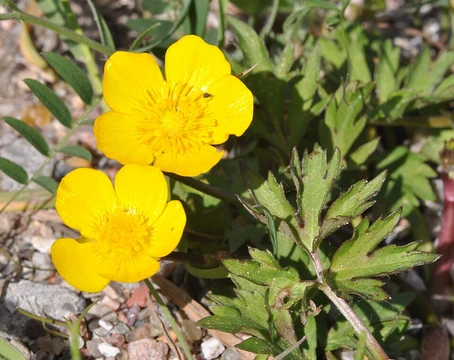
Lilium
A genus of bulbous flowering plants with cultural significance worldwide.

Lilium is a genus of herbaceous flowering plants growing from bulbs, known for their large and often prominent flowers. They are important in culture and literature in much of the world, with most species native to the Northern Hemisphere in temperate and subtropical climates.
- type
- Genus of flowering plants
- native_range
- Northern Hemisphere, temperate to subtropical
- chromosome_number
- n=12
- flowering_season
- Late spring to summer
- toxicity
- Highly toxic to cats
Lore & Background
Lilies are tall perennials ranging from 1 to 6 feet in height, forming naked or tunicless scaly underground bulbs. Some North American species develop rhizomes with small bulbs, while others produce stolons. The flowers are large, often fragrant, and come in whites, yellows, oranges, pinks, reds, and purples, with markings such as spots and brush strokes. They are borne in racemes or umbels at the stem tip, with six tepals that may be spreading or reflexed.
Reader's Guide
Lilies have been cultivated widely in temperate, subtropical, and tropical regions, with numerous ornamental hybrids developed. They are used in herbaceous borders, woodland plantings, and as patio plants. Some species, like Lilium longiflorum, are forced for the Easter trade as cut flowers or potted plants. The genus is divided into seven sections, including Martagon, Pseudolirium, and Sinomartagon, among others. Lilies are important in culture and literature globally, though many plants with 'lily' in their common name are not true lilies. True lilies are highly toxic to cats. The proliferation of deer in North America threatens wild and garden lily populations.
Did You Know?
- Lilies are highly toxic to cats.
- The basic chromosome number for Lilium is twelve (n=12).
- Some species produce contractile roots that move bulbs deeper into the soil.
- The Latin name Lilium is derived from the Greek word leírion, referring to true white lilies.
Morphology and Underground Architecture
Lilium species are tall perennial herbs that can reach anywhere from one to six feet in height, all anchored by scaly underground bulbs that lack the papery tunic found in many other bulb-forming plants. These bulbs serve as the primary storage organs for the plant's survival between growing seasons. In certain North American species, the bulb base extends into rhizomes that carry clusters of tiny secondary bulbs, while others produce stolons. A particularly interesting feature is the development of stem-roots: as the new stem pushes through the soil each year, it generates adventitious roots above the bulb in addition to the basal roots at the bulb's base. Some species also grow contractile roots that actively pull the bulb deeper into the ground over time. The chromosome number across the genus is consistently twelve. Most cool-temperate species are deciduous and rest through winter, whereas a few species from regions with hot summers and mild winters—such as the Madonna lily and the Easter lily—reverse this cycle, losing foliage in summer or autumn and sprouting in cooler months.
Taxonomic Structure and the Etymology of the Name
The Sinomartagon group is further split into three paraphyletic clusters, while Leucolirion divides into two. Over time, several species once placed here have been reclassified into genera such as Cardiocrinum, Notholirion, and Fritillaria, and the names Lirium, Martagon, and Nomocharis are now generally treated as synonyms rather than distinct genera. The scientific name itself traces a remarkable linguistic path: the Latin Lilium, established as a Linnaean term, derives from the Greek leírion, which in turn was borrowed from Coptic, then Demotic, ultimately reaching back to the ancient Egyptian word ḥrr.t meaning simply "flower." The Greeks also used krīnon for lilies of any color. In English, the word "lily" has been loosely attached to dozens of unrelated plants, and even biblical translations render the Hebrew shūshan as "lily" when the original may have referred to honeysuckle.
Native Range, Habitat Preferences, and Ecological Pressures
True lilies are predominantly Northern Hemisphere plants. In the Old World their distribution stretches across much of Europe, spans most of Asia reaching Japan, extends southward into India, and pushes east into Indochina and the Philippines. In the New World they occupy territory from southern Canada down through a large portion of the United States. Habitat-wise, lilies favor woodland settings—often at montane elevations—or open grasslands, though a handful tolerate marshy ground and a few tropical Southeast Asian species grow as epiphytes. They generally thrive in moderately acidic or lime-free soils. Ecologically, lily foliage serves as a food source for the larvae of certain Lepidoptera, including the Dun-bar moth. In North America, the dramatic expansion of white-tailed deer populations—largely a consequence of eliminating large predators for human safety—has become a serious threat to wild lily stands. Preventing deer browse may require fences as tall as eight feet, a barrier that is impractical to install across most wild landscapes. Additionally, true lilies are known to be highly toxic to cats.
Cultivation, Commercial Use, and Cultural Resonance
Lilies occupy a prominent place in horticulture across temperate, subtropical, and even tropical regions. Gardeners grow them in herbaceous borders, woodland and shrub plantings, and as patio specimens, and breeders have produced a vast array of ornamental hybrids. The Easter lily (Lilium longiflorum) stands out as a major cut-flower and potted-plant crop, commercially forced to bloom outside its natural season to meet demand for events such as Easter. Bulbs are typically planted during the dormant season in a south-facing, gently sloping position that receives full sun or partial shade, set at a depth roughly two and a half times the bulb's height—though the Madonna lily is an exception, planted at the soil surface. A porous, loamy soil suits most species. Beyond the garden, lilies carry deep cultural weight: they appear throughout world literature and art, and the name has been borrowed so widely that dozens of unrelated flowering plants—water lily, calla lily, lily of the valley, daylily, and many others—carry the word in their common names despite having no taxonomic connection to the true genus.
Frequently Asked Questions
What is Lilium?
Lilium is a genus of herbaceous, bulb-grown plants celebrated for their large, showy blooms. It groups together many species that share a similar growth habit and floral structure.
Where is Lilium native to?
Most lily species are indigenous to the Northern Hemisphere, thriving in temperate and subtropical climates. They are not naturally found in tropical or Southern Hemisphere wilds.
When does Lilium bloom?
The flowering window generally runs from late spring through the summer months. Exact timing shifts by species, but most produce their prominent blossoms during the warmest stretch of the growing season.
Is Lilium dangerous to pets?
Yes—lilies are highly toxic to cats, and even tiny amounts of pollen, petal, or sap can trigger severe kidney damage. Pet owners are strongly advised to keep both potted lilies and cut stems well out of a cat's reach.
Why is Lilium culturally significant?
Lilies have appeared in art, literature, and religious symbolism across many world cultures for centuries. Their striking form and fragrance have made them a recurring motif from ancient mythology through modern horticulture.
More in Flowering Plants 1-15
Spotted an error? Know more?
This is a living reference — every entry is fact-audited, and reader corrections feed straight into our audit queue. Suggest an edit · See this site's audit record