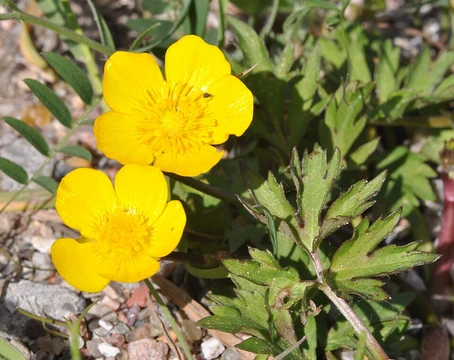
Orchid
Diverse flowering plants with specialized pollination and tiny seeds.

Orchids are flowering plants belonging to the family Orchidaceae, one of the two largest families of flowering plants. They are cosmopolitan, found on every continent except Antarctica, with the richest diversity in the tropics. Many orchids are epiphytes, living on trees, and their flowers are often colorful and fragrant, with highly specialized pollination mechanisms.
- family
- Orchidaceae
- distribution
- cosmopolitan, except Antarctica
- growth form
- perennial herbs, lacking permanent woody structure
- pollination
- insect pollinators attracted by color, pattern, scent, pheromones, mimicry
- seed type
- very small, lacking endosperm, reliant on fungal partners for germination
Lore & Background
Orchids are easily distinguished by several shared characteristics: bilateral symmetry of the flower, a highly modified middle petal (labellum), stamens and carpels fused into a column, and extremely small seeds. They grow as perennial herbs, either monopodially (single bud, as in Vanda) or sympodially (with pseudobulbs). Terrestrial orchids may have rhizomes or tubers, while epiphytic orchids have aerial roots covered with a velamen layer. Some orchids are leafless, photosynthesizing through their roots or relying entirely on fungal partners for food. Orchid flowers are varied in form, with three sepals, three petals, and a three-chambered ovary. The labellum attracts insects and often serves as a landing stage or trap. Pollination mechanisms are complex: most orchids produce a pollinium (a mass of pollen) attached to a sticky disc. When a pollinator touches the viscidium, the pollinium sticks to its body and is transferred to another flower. Some orchids, like Ophrys, mimic female insects to attract males, while Catasetum saccatum launches its pollinia explosively. Orchid seeds are almost microscopic and very numerous, lacking endosperm. They require symbiotic relationships with mycorrhizal fungi to germinate, making most orchids mycoheterotrophic during germination. A few species, such as those in the genus Disa, have hydrochorous seeds that can germinate without mycorrhiza. Some orchids reproduce asexually via offshoots (keiki), and some, like Epipogium aphyllum, exhibit both sexual and asexual seed production.
Reader's Guide
Their cosmopolitan distribution and diverse habitats, from tropics to temperate regions, highlight their ecological adaptability. Orchids' reliance on mycorrhizal fungi for seed germination underscores their unique life cycle and dependence on symbiotic relationships. Horticulturally, orchids have inspired numerous hybrids and cultivars, with orchid societies worldwide. Fossil evidence, such as Meliorchis caribea in Miocene amber and Succinanthera baltica in Eocene amber, provides ancient records of orchid-insect interactions. The family's etymology, from the Greek word for testicle due to tuber shape, and historical names like bollockwort, reflect long human interest. Orchids' lack of permanent woody structure and varied growth forms (monopodial, sympodial) further distinguish them among flowering plants.
Did You Know?
- Orchids are found on every continent except Antarctica.
- The name 'orchid' comes from the Ancient Greek word for testicle, due to the shape of twin tubers in some species.
- Some orchids, like Catasetum saccatum, launch their pollinia with explosive force when touched by an insect.
- Most orchid seeds lack endosperm and require mycorrhizal fungi to germinate.
Global Reach and Biodiversity
This staggering variety accounts for somewhere between six and eleven percent of every seed-bearing plant species on Earth. Their range is genuinely cosmopolitan—orchids occur on every continent except Antarctica, thriving in an extraordinary spread of habitats. The tropical regions, however, harbour the densest concentration of orchid genera and species, making them the evolutionary heartland of the family. Many species have adapted to life as epiphytes, anchoring themselves to tree trunks and branches rather than soil, while others remain terrestrial, developing rhizomes or tubers beneath the ground. The family's sheer scale has inspired a global community of horticulturists who maintain orchid societies worldwide, breeding countless hybrids and cultivars that extend the family's presence far beyond its natural range.
The Architecture of the Orchid Flower
Orchid blooms are immediately recognizable due to a suite of shared derived traits that set them apart from other plant families. Most display bilateral symmetry, meaning the flower can only be divided into mirror-image halves along a single plane. A defining feature is the labellum—a highly modified middle petal that often takes on the appearance of a lip, tongue, or even a landing platform for visiting insects. That column itself is a remarkable fusion of stamens and carpels into a single structural unit, a feature virtually unique to this family. Beyond the labellum, orchid blooms typically bear three sepals and three petals arranged around a three-chambered ovary.
Pollination Strategies and Darwin's Legacy
In most species, pollen is packaged into a single compact mass called a pollinium, capable of fertilizing thousands of ovules in one transfer. When a pollinator enters the flower, it brushes against a sticky disc called the viscidium, which adheres to its body. As the insect exits, the attached caudicle bends, repositioning the pollinium so that it will press against the stigma of the next flower it visits. Beyond visual attraction, some orchids employ chemical lures—certain Bulbophyllum species release compounds like methyl eugenol to draw in male fruit flies. The genus Ophrys takes mimicry to an extreme, with labella that replicate the colour, shape, and scent of receptive female insects, tricking males into pseudocopulation. At the other end of the spectrum, Paphiopedilum parishii bypasses pollinators entirely, self-fertilizing as its anther liquefies and contacts the stigma directly.
Growth Patterns and Fungal Partnerships
Orchids are perennial herbs that never develop permanent woody tissue, and they follow two principal growth strategies. Monopodial species, such as Vanda, extend a single apical bud upward year after year, adding leaves at the tip. Sympodial species grow laterally at the front while older growth recedes behind, often forming swollen structures called pseudobulbs. Their relationship with fungi is equally fundamental: orchid seeds are so minute that they cannot germinate without a mycorrhizal partner. Some species push this dependence further—Corallorhiza, the coralroot orchids, possess no leaves at all and absorb sugars entirely through fungal mycelium. The leafless epiphyte Taeniophyllum aphyllum, by contrast, photosynthesizes through its green roots, while Phalaenopsis uses root photosynthesis to prevent oxygen deprivation in its root system. Older root sections are sheathed in velamen, a protective layer of dead cells. This interplay of growth architecture and symbiotic dependence makes orchids one of the most ecologically intricate plant families on the planet.
Frequently Asked Questions
What is Orchid?
Orchid refers to a vast group of perennial flowering plants classified under the family Orchidaceae, which ranks as one of the two biggest families among all flowering plants. Unlike most woody plants, orchids are herbaceous perennials without any permanent woody tissue.
Where does Orchid grow?
Orchids are found on every continent except Antarctica, making them truly cosmopolitan. Their greatest diversity and abundance occur in tropical regions, where many species grow as epiphytes perched on tree branches rather than in soil.
How does Orchid attract pollinators?
Orchid flowers use a remarkable toolkit of color, pattern, scent, pheromones, and even visual mimicry to lure specific insect pollinators. These highly specialized mechanisms mean many orchid species rely on just one or a few particular insects for successful fertilization.
How does Orchid produce and grow from seeds?
Orchid seeds are extraordinarily tiny and contain no endosperm, meaning they cannot sustain a seedling on their own. Instead, they depend on a symbiotic fungal partner to provide the nutrients needed for germination and early growth.
Why is Orchid considered so important in botany?
As one of the two largest families of flowering plants, Orchidaceae represents an enormous share of global plant diversity. Their intricate pollination strategies, epiphytic lifestyle, and dependence on fungi make them a key subject for understanding co-evolution and ecosystem interdependence.
More in Flowering Plants 1-15
Spotted an error? Know more?
This is a living reference — every entry is fact-audited, and reader corrections feed straight into our audit queue. Suggest an edit · See this site's audit record