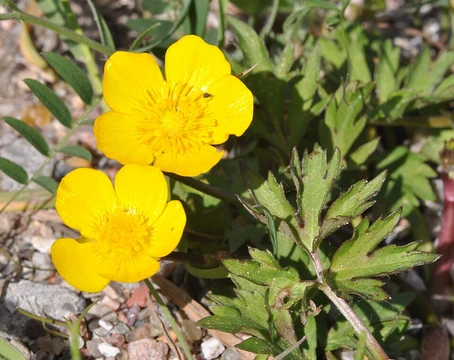
Tulip
Spring-blooming bulbous geophytes with showy, colourful flowers.

Tulips are spring-blooming perennial herbaceous bulbiferous geophytes in the genus Tulipa, part of the lily family Liliaceae. Their flowers are usually large, showy, and brightly coloured, and they have been cultivated for centuries, becoming associated with the Netherlands and the subject of a famous investment bubble in the 17th century.
- Scientific name
- Tulipa
- Family
- Liliaceae
- Number of species
- about 75
- Subgenera
- 4 (Clusianae, Orithyia, Tulipa, Eriostemones)
- Native range
- Southern Europe to Central Asia
- Bloom season
- Spring
Lore & Background
Tulips were originally found in a band stretching from Southern Europe to Central Asia, adapted to steppes and mountainous areas with temperate climates. The Persian and Turkish people were the first to cultivate them, with cultivation dating back to 10th-century Persia. By the 15th century, tulips were among the most prized flowers, becoming a symbol of the later Ottomans.
Reader's Guide
Tulips are significant both horticulturally and historically. Their cultivation spans over a millennium, beginning in Persia and the Ottoman Empire, and they later became a symbol of the Netherlands after the Dutch tulip mania of the 17th century. During that period, an infection by the tulip breaking virus created admired variegated patterns, now approximated by the Rembrandt group. Breeding programmes have produced thousands of hybrids and cultivars, making tulips popular worldwide as ornamental garden plants and cut flowers. The genus includes about 75 species divided into four subgenera, and classification has been complex due to variability and long cultivation.
Did You Know?
- The name 'tulip' is thought to be derived from a Turkish word for turban, due to a perceived resemblance of the flower's shape.
- Tulips do not have nectaries, and their colour is formed from two pigments: a base colour of yellow or white and a second anthocyanin colour.
Frequently Asked Questions
What is a tulip?
A tulip is a spring-blooming perennial that grows from an underground bulb and produces a single large, brightly coloured cup-shaped flower on a leafless stem. It belongs to the genus Tulipa within the lily family (Liliaceae) and is classified as a bulbiferous geophyte.
Where do tulips originally grow?
Wild tulips are native to a broad stretch of land running from southern Europe eastward through to central Asia. They are well adapted to temperate climates and have since been cultivated far beyond their original range over many centuries.
When do tulips bloom?
Tulips are a classic early-spring flower, typically opening after a period of cold winter dormancy. Their relatively short flowering window is one reason they are so prized in seasonal garden displays.
How many tulip species are there?
Botanists recognise roughly 75 distinct species within the genus Tulipa, grouped into four subgenera: Clusianae, Orithyia, Tulipa, and Eriostemones. The vast majority of cultivated varieties, however, are hybrids derived from only a handful of wild species.
Why are tulips so closely associated with the Netherlands?
Although tulips are not native to the Netherlands, the country became the world's centre for tulip breeding and trade starting in the 16th and 17th centuries. This legacy was cemented in popular memory by the famous 17th-century tulip mania, a speculative investment bubble that turned the flower into a lasting symbol of Dutch commerce.
More in Flowering Plants 1-15
Spotted an error? Know more?
This is a living reference — every entry is fact-audited, and reader corrections feed straight into our audit queue. Suggest an edit · See this site's audit record